
From a place of hurting to a place of healing.
You cannot erase history by destroying a building…
“When I acquired this land and the building in 1981 as a young chief at that time, I wanted to destroy it. I wanted to demolish it. But elders told me, “No, you’ve got to keep it for a testimony to the world at large to tell what happened to us.”
So I kept it as a building, because it is a solid building, a functional building and used by many groups over the years. So I wanted to keep it as a testament of our past, Canada’s policy on discrimination, assimilation, eradication, decimation of our people.”
– Ernie Daniels, former Chief of Long Plain First Nation
The Journey from Hurting to Healing
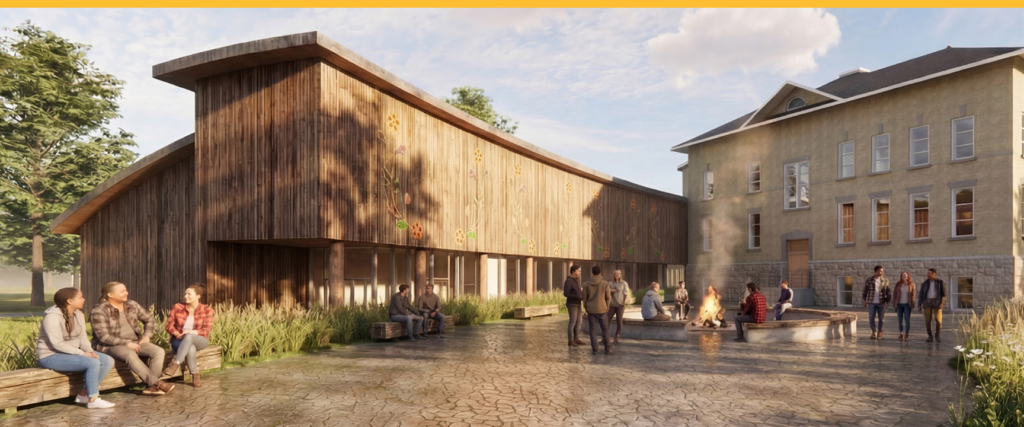
The goal of the project is to transform the Rufus Prince Building from a place of hurting to a place of healing.
The TRC’s final report, complete with a list of 94 Calls to Action, stresses that Canadians must confront their country’s history of schooling and colonialism before reconciliation, as the process of “establishing and maintaining respectful relationships” with Indigenous peoples, can begin.
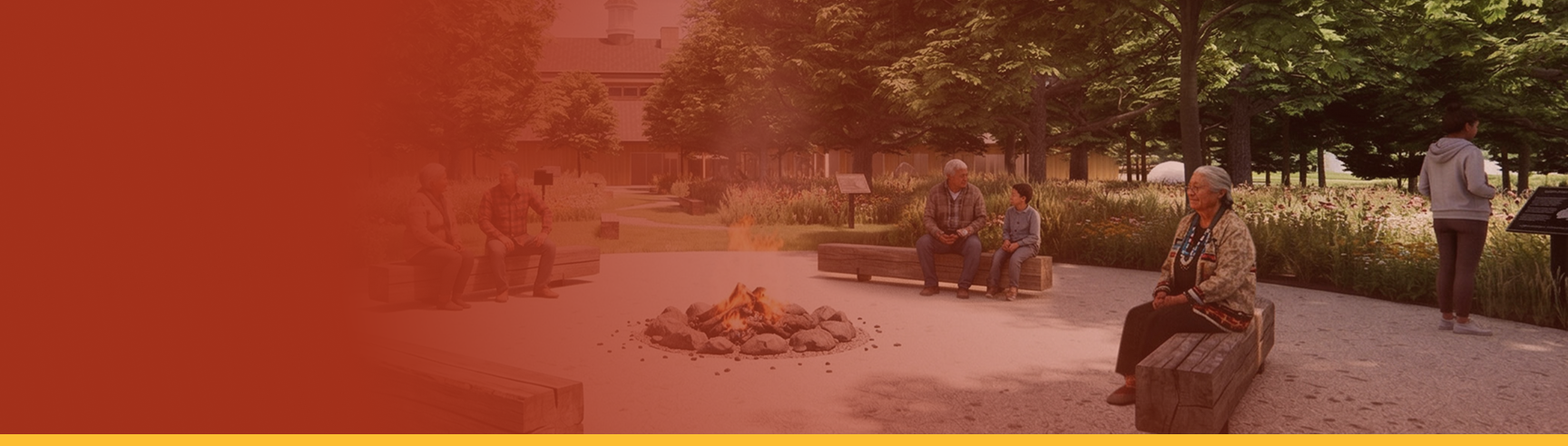
The circle is how the project engages with the teachings, healing through land-based medicines & the connection to water.
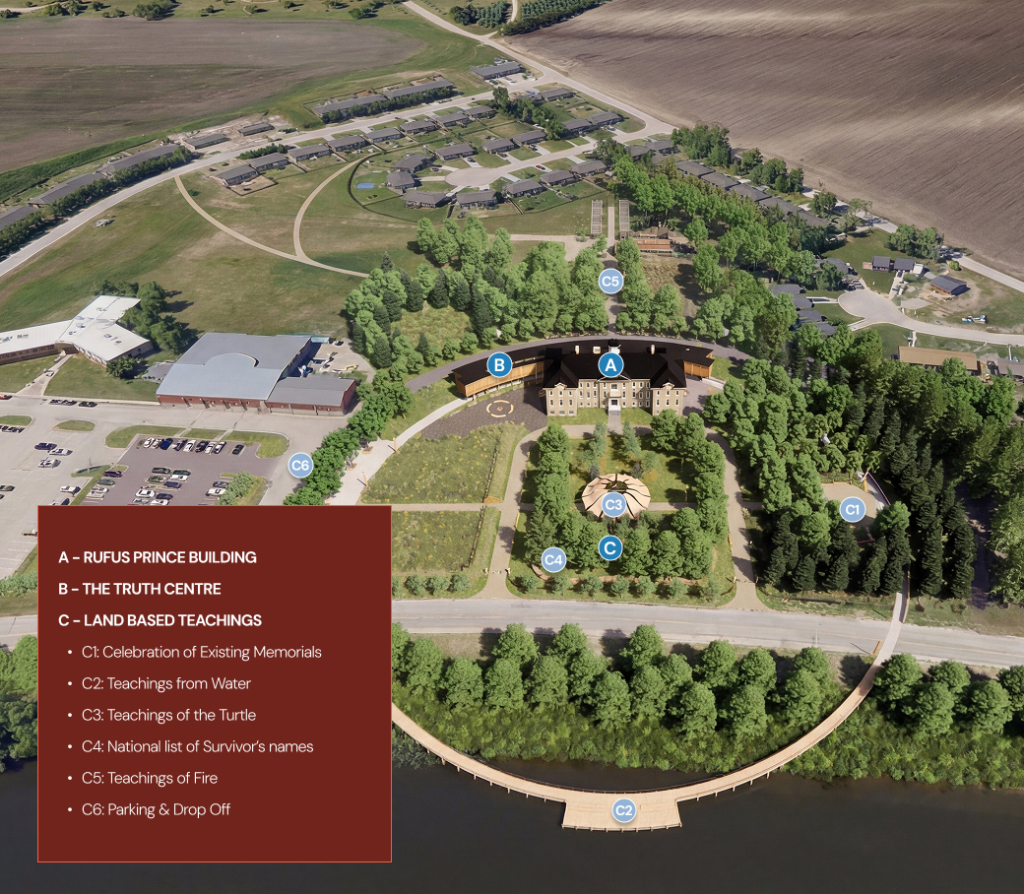
- A
- Rufus Prince Building
- B
- The Truth Centre
- C
-
Land Based Teachings
- C1
- Celebration of Existing Memorials
- C2
- Teachings from Water
- C3
- Teachings of the Turtle
- C4
- National list of Survivor's names
- C5
- Teachings of Fire
- C6
- Parking & Drop Off
Spirit of the Project
A visit to the National Indigenous Residential School Museum is conceived as a guided emotional and learning journey that blends spatial storytelling with first person truth telling.
The journey through the National Indigenous Residential School Museum will be guided by the Seven Sacred Teachings, a foundational set of Anishinaabe teachings that offer guidance on how to live in relationship with one another, the land, and creation.
Rather than presenting history as a series of isolated facts, the museum invites visitors to move through the building as a learning journey, where each space holds one of the teachings.
The teachings do not simply organize the exhibits – they offer a way of approaching difficult histories with care, responsibility, and reflection. In this way, the museum experience is grounded in Indigenous knowledge systems and ways of understanding the world.
Dabasendizowin | Humility
Remembering our place within a larger web of relationships.
Humility is represented by the Wolf. The Wolf understands that no one is better than another; all are equal and essential to the balance of nature.
The museum journey begins with the teaching of Humility, represented by the Wolf. This teaching reminds us of our place within a larger web of relationships—with one another, with the past, and with the generations that will follow. Entering this museum requires a posture of humility. Visitors are invited to recognize that the history presented here is not a distant story belonging only to a particular group of people or to a particular moment in time. The impacts of these histories reach across communities and generations.
Humility asks us to approach the exhibits with openness—to acknowledge that what we have learned about this history may be incomplete or shaped by limited perspectives. Visitors may be asked to reconsider or unlearn certain assumptions. In doing so, we recognize that we are connected to the experiences of our ancestors and responsible to those who will come after us.
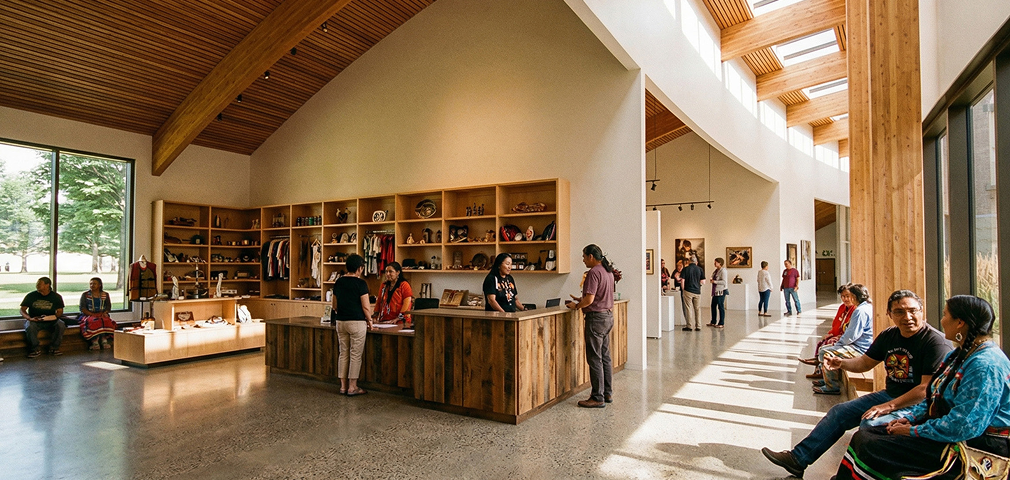
The welcoming area sets the tone for the journey ahead, inviting visitors to enter with respect, curiosity, and a willingness to listen.
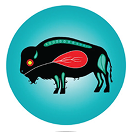
Manaaji’idiwin | Respect
To honour all of Creation.
Respect is represented by the Buffalo. The Buffalo teaches respect for life and reminds us that when one life is harmed, the entire community is affected.
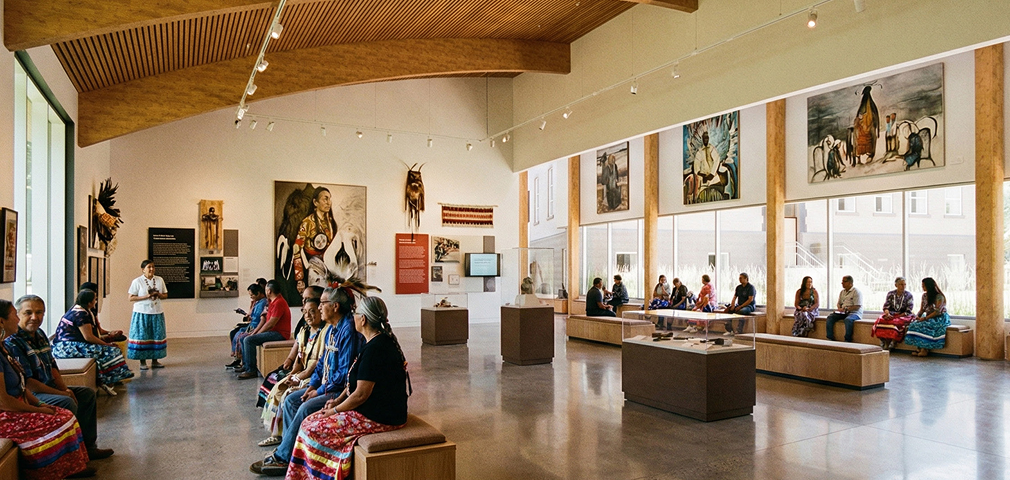
The contemporary galleries are guided by the teaching of Respect, represented by the Buffalo. These exhibits explore the ongoing impacts of residential schools and colonial policies, including the Sixties Scoop, Indigenous children in care, Missing and Murdered Indigenous Women, Girls, and Two-Spirit people (MMIWG2S+), and the legacy of residential schools in contemporary society. They also highlight movements for justice and healing, including the Orange Shirt Day movement, church apologies, and the contributions of Indigenous veterans.
The Buffalo teaches respect for life and reminds us that when one life is harmed, the entire community is affected. Unlike many animals that flee from storms, buffalo turn to face them together. In this spirit, the contemporary exhibits encourage visitors to face these histories directly—with honesty and respect for those whose lives have been impacted. They invite reflection on how understanding the past shapes the responsibilities we carry today.

Debwewin | Truth
Speaking only to the extent that we have lived or experienced.
Truth is represented by the Turtle. The Turtle was here during the creation of Earth and carries the teachings of life on his back.
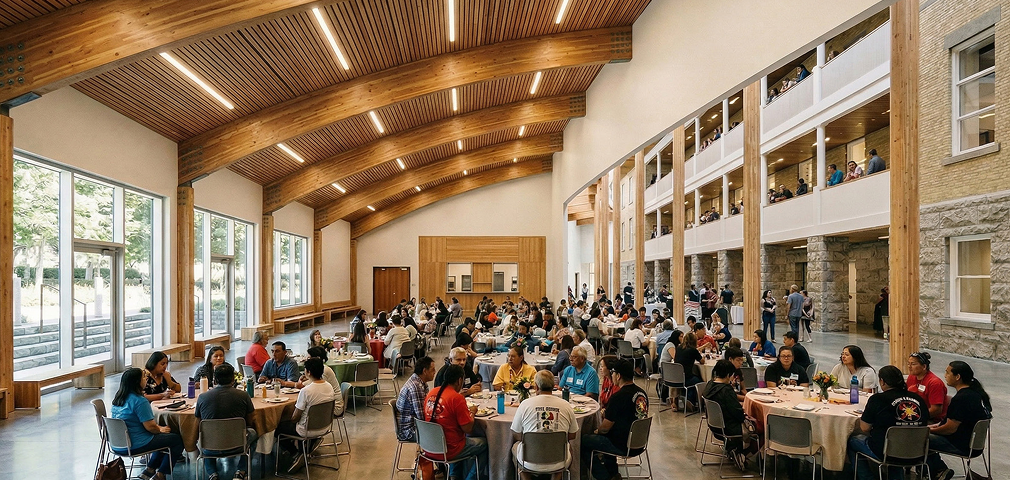
At the centre of the building is a gathering space dedicated to the teaching of Truth. While this space may functionally resemble what museums often call an event space, its purpose is much deeper. In the context of a residential school museum, this area is reclaimed as a truth-telling and learning space.
For generations, Indigenous peoples were prevented from gathering freely under the Indian Act, and children in residential schools were separated from family and community. This central space reclaims the right to gather, speak, and learn together. Here, films may be screened, workshops and teachings may take place, and community conversations may unfold. Above all, it is a place where the act of truth-telling is honoured— where stories can be shared and witnessed in a spirit of respect and responsibility.
Museums that embody truth and reconciliation do more than add Indigenous content — they transform relationships, governance, and practices, so Indigenous communities lead how their histories are shared.
Nibwaakaawin | Wisdom
Embracing knowledge and acting for the greater good.
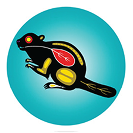
Wisdom is represented by the Beaver. The Beaver uses it’s gifts to work with the land in a way that supports the wellbeing of its family and the broader ecosystem.
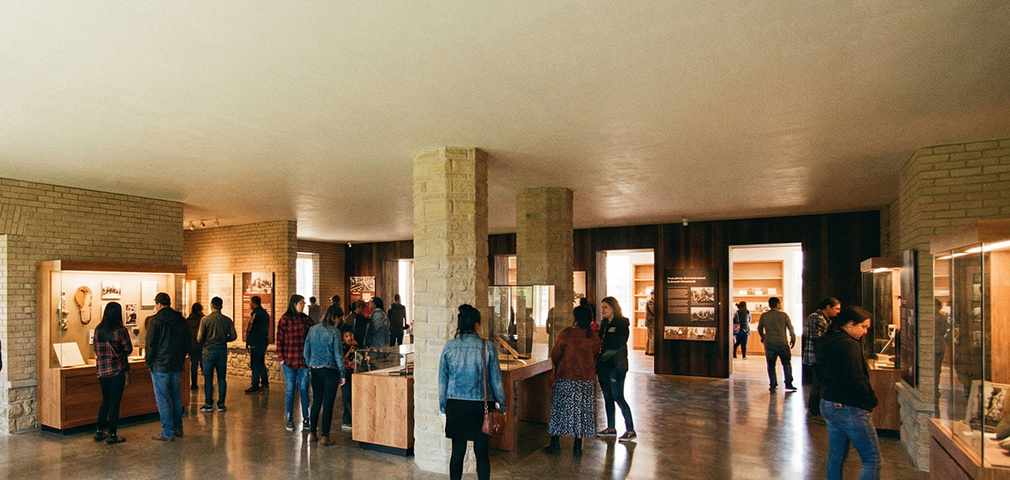
As visitors move into the pre-contact and treaty exhibits, the journey is guided by the teaching of Wisdom, represented by the Beaver. These exhibits highlight the depth and richness of Indigenous knowledge systems that sustained communities for millennia.
They explore the relationships, governance systems, and ways of living that shaped Indigenous societies long before colonial policies disrupted them.
Within Anishinaabe clan systems, clans related to Beaver/Wisdom were the builders, planners, and those responsible for economic stewardship—people who understood how to work with the gifts of the land to support the wellbeing of the community. This spirit of relationship and shared benefit also shaped the early encounters between Indigenous peoples and newcomers as we see within various Treaties.
This section of the museum invites visitors into these diverse ways of seeing, encouraging them to encounter history through Indigenous perspectives and knowledge traditions.
Zoongide’ewin | Courage
To live with a solid, strong heart.
Courage is represented by the Bear. The mother Bear has the courage and strength to face her fears and challenges while protecting her young.
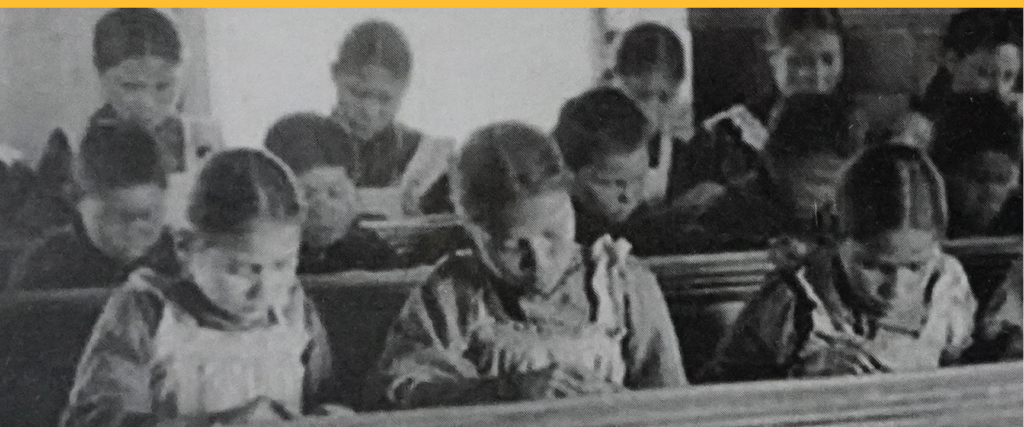
The residential school galleries are guided by the teaching of Courage, represented by the Bear. These exhibits acknowledge the immense courage of Survivors. Children who attended residential schools were often taught through fear and punishment to remain silent about their experiences. Despite this, many Survivors found the strength to share their stories later in life. Their courage made it possible for the country to confront this history. In other words, we can stand on their courage to share their history as visitors look with courage to learn from it.
Survivors, through truth-telling, offered a profound gift: the opportunity for future generations to understand what happened and to work toward reconciliation. In Anishinaabemowin, strength is often described as having a strong heart. Courage, in this sense, is not only the strength to endure hardship but also the strength to seek healing and reconciliation for the generations that follow. This gallery honours the courage it took to survive—and the courage it took to speak.
It is the responsibility of every individual in Canada to learn about the impact, history and legacy of the Residential School System.

Gwayakwaadiziwin | Honesty
To walk through life with truth and integrity.
Honesty is represented by Sabe. The Sabe understands who they are and how to walk in life as the Creator made them.
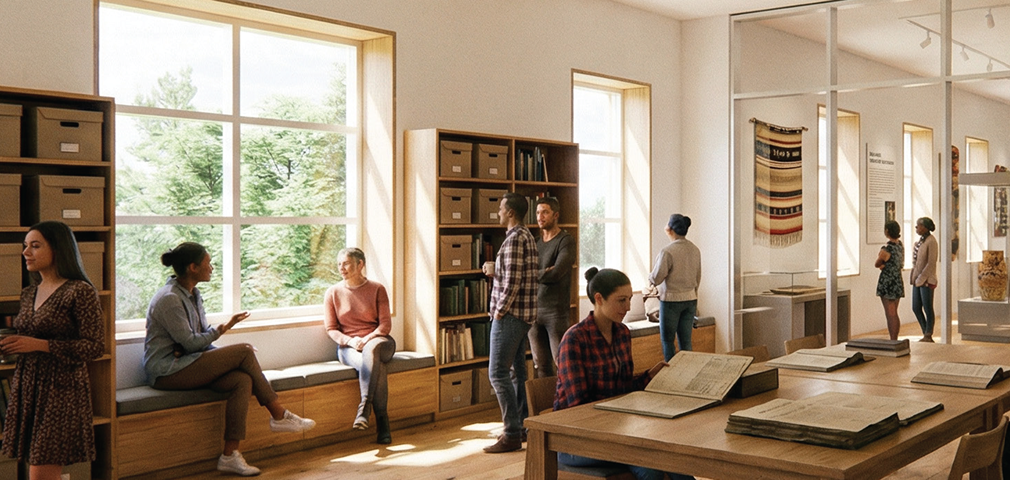
The museum’s library and archival space is guided by the teaching of Honesty, represented by Sabe.
Researching and understanding the history of residential schools requires honesty—the willingness to confront both difficult truths and complex realities. This space provides access to records, research materials, and knowledge that allow visitors, scholars, and community members to continue learning.
Honesty asks us to examine history in its fullness: to acknowledge both the harm that occurred and the resilience of the people who endured it. Through research and documentation, this space supports the ongoing work of understanding and accountability.
It will only be by understanding where we come from, where we are going, why we are here, and who we are, that the truth and healing can truly begin.
Zaagi’idiwin | Love
Unconditional love between one another, including all of Creation, humans and non-humans, across generations.
Love is represented by the Eagle. The Eagle has the strength to soar high above and carry the teachings from the Creator to share with her young.
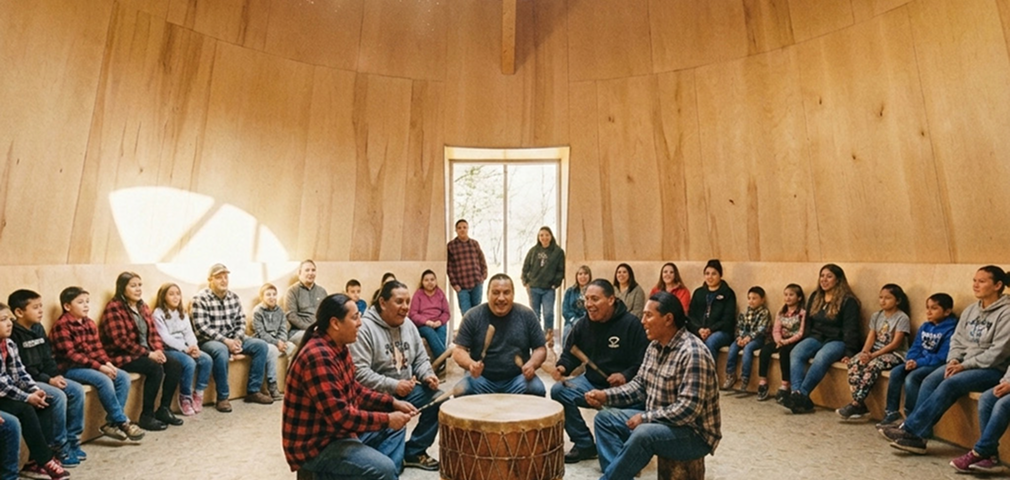
The journey through the museum concludes with the teaching of Love, represented by the Eagle. This final space includes the round cultural room and memorial areas, including the Eagle memorial. After encountering the difficult histories presented throughout the museum, visitors are invited into a place of care, reflection, and ceremony. Smudging, prayer, and cultural practices may take place here, offering a way to care for the spirit after engaging with challenging stories. Visitors are also invited to participate in acts of remembrance, honouring the children and families whose lives were impacted by residential schools.
Love, in this context, is not simply a feeling—it is a responsibility carried across generations. It honours those who came before, cares for those living today, and affirms a commitment to future generations. The museum journey concludes in this space with remembrance, reflection, and hope.
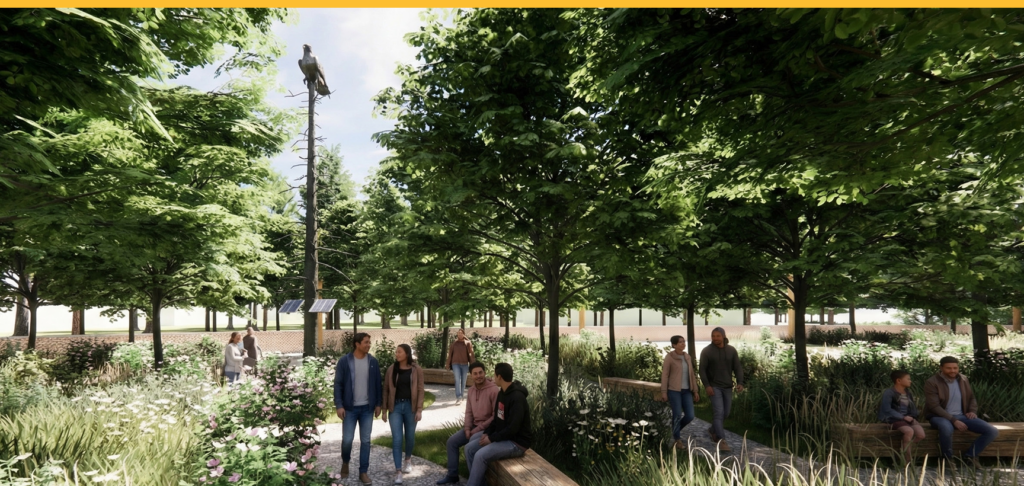
The Land as Teacher and Healer
The landscape design is based on the land’s natural processes, prioritizing how a site supports all relations beyond just the human realm.
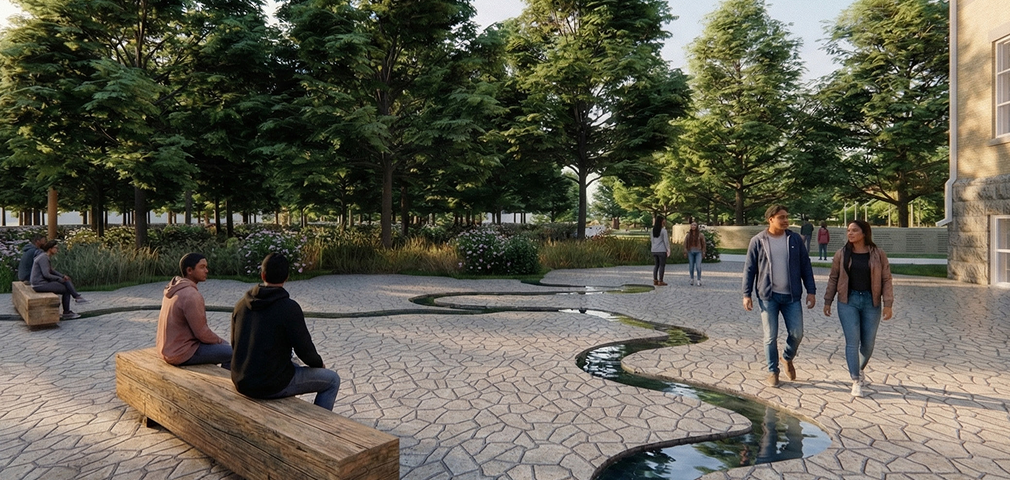
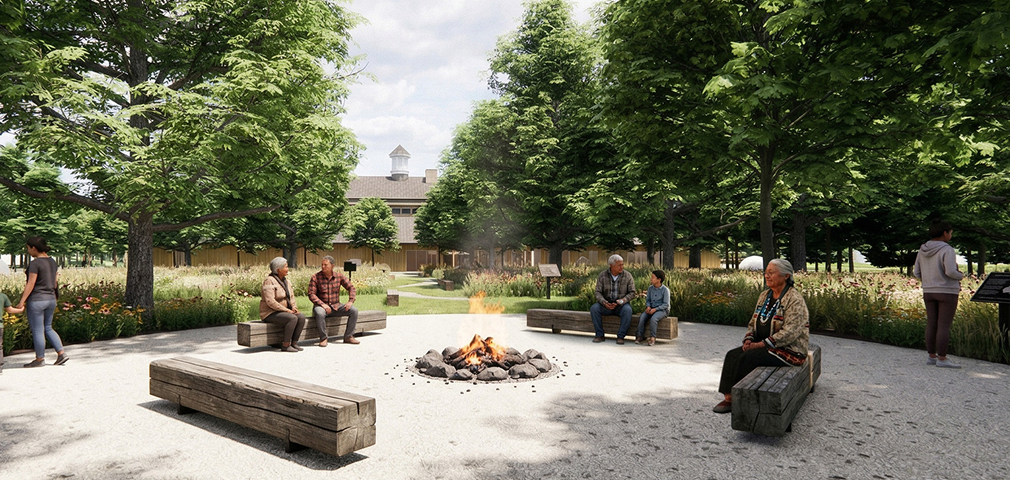
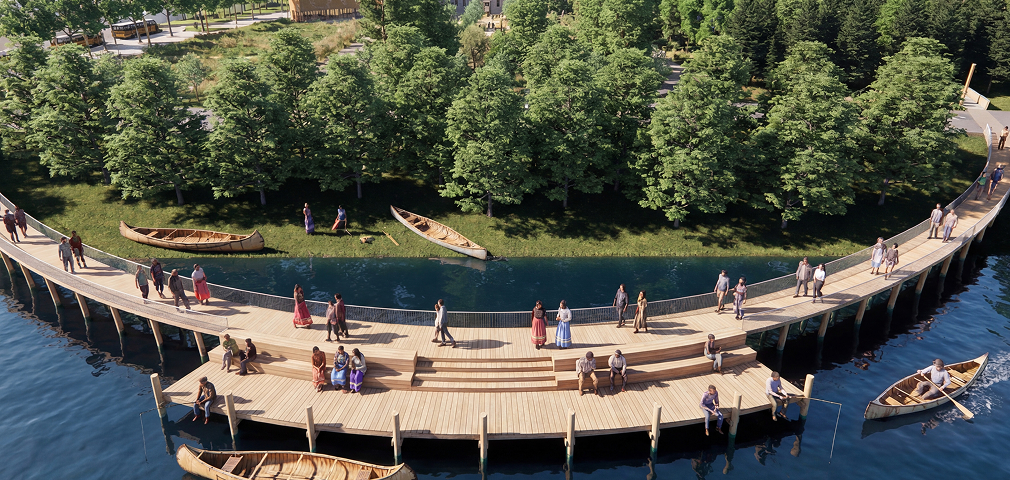
Visitors experience how the land teaches healing, relationship, and renewal. The land reminds us that the children and Survivors are connected to the land, healing happens in relationship with creation, and life continues.
Core Project Themes
The landscape design is based on the land’s natural processes, prioritizing how a site supports all relations beyond just the human realm.
Do Not Sanitize
The information and history shared in the museum shall not be sanitized by a colonial lens. Indigenous stories will be told by Indigenous voices, through Indigenous storytelling traditions. These stories will be honoured, celebrated, grieved, and respected in their raw and courageous truth.
Building as Artifact
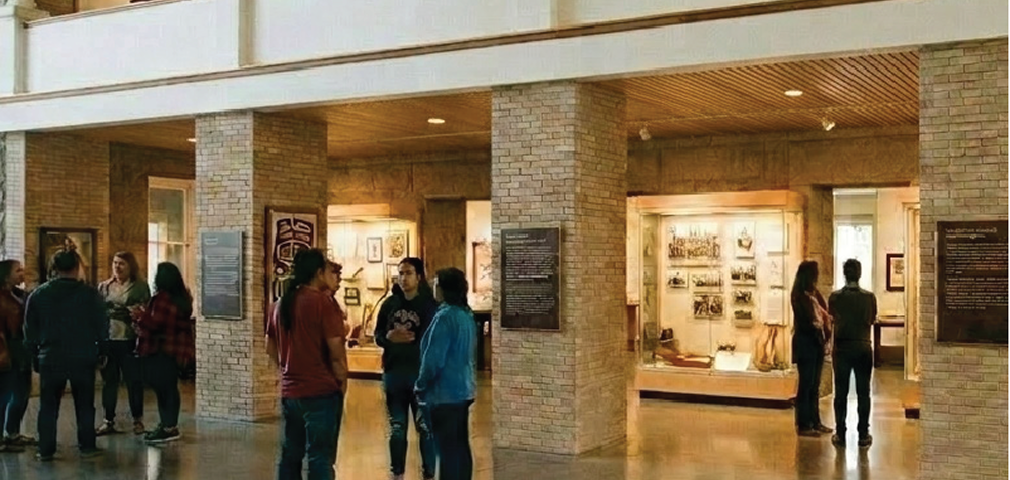
Survivors and community members expressed a strong desire for the Rufus Prince building to focus exclusively on Residential School interpretation, restoring it to its original state so the building itself functions as an artifact that helps visitors understand children’s lived experiences.
Indigenous Trauma-informed Design
Trauma-informed design from an Indigenous lens aims to ensure that the proposed museum is culturally authentic and adaptable, while being supportive to both individual and collective healing. The goal is to integrate cultural sensitivity, historical awareness, and neuroscience principles to create a healing environment. By considering Indigenous healing practices when addressing historical trauma, we can incorporate therapeutic spaces that are rooted in Indigenous traditions. Providing a variety of culturally safe spaces and transitional landscapes offers quiet spaces for reflection, decompression and healing throughout the museum. Most importantly, safety and security will be prioritized to reduce anxiety and stress, as well as avoid the possibility of retraumatization, for all who interact with the space.
Authenticity
It is essential that the project continues to be guided by those whose experiences and knowledge are central to its creation –Survivors, Elders, community members, and museum staff.
Indigenous Trauma-informed Design
Trauma-informed design from an Indigenous lens aims to ensure that the proposed museum is culturally authentic and adaptable, while being supportive to both individual and collective healing. The goal is to integrate cultural sensitivity, historical awareness, and neuroscience principles to create a healing environment.
Code/Fire/Accessibility
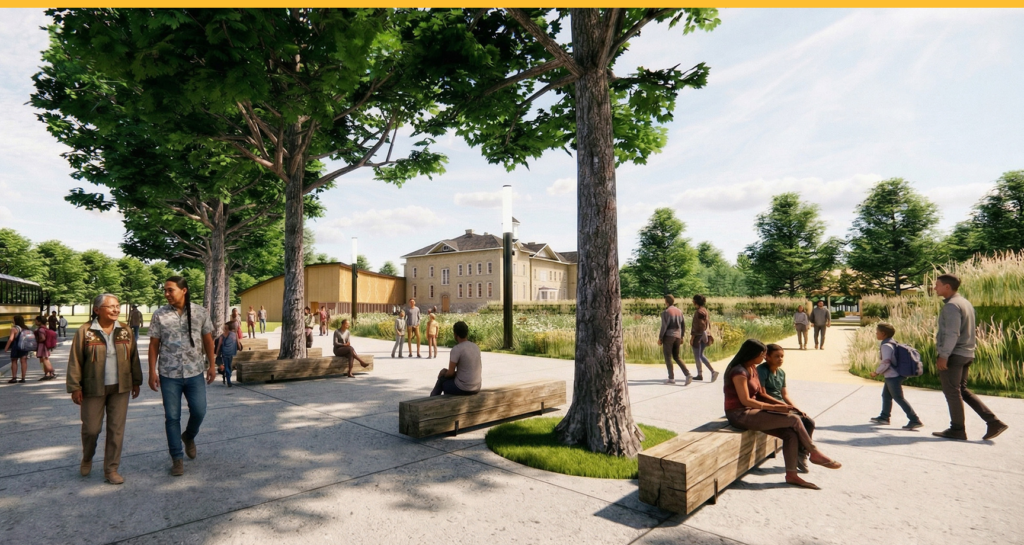
The only modifications made to the Rufus Prince Building will be to ensure the building meets all fire, accessibility and life safety code requirements, so the building is safe and accessible to all who visit. Required modifications will be completed in a historically appropriate manor, restoring to the interpretive date of construction wherever possible.
As the Journey Continues
As the redevelopment of the National Indigenous Residential School Museum of Canada project moves forward, the process should continue to progress from a place of Humility, Courage and Love.
Looking to the Seven Sacred Teachings as a guide on how to move forward will ensure that the project intention, which at is core is the move from a place of hurting to a place of healing, will be upheld and prioritized.
As the journey continues, we look to the Sabe who teaches that it is important to know who we are, our place in this story, and to ensure that Indigenous voices are telling their own story in all its truth, pain, resilience, grief and joy.