
Better understand how residential schools affected Indigenous children, families, communities, and generations.
Residential Schools in Canada: A Historical Overview
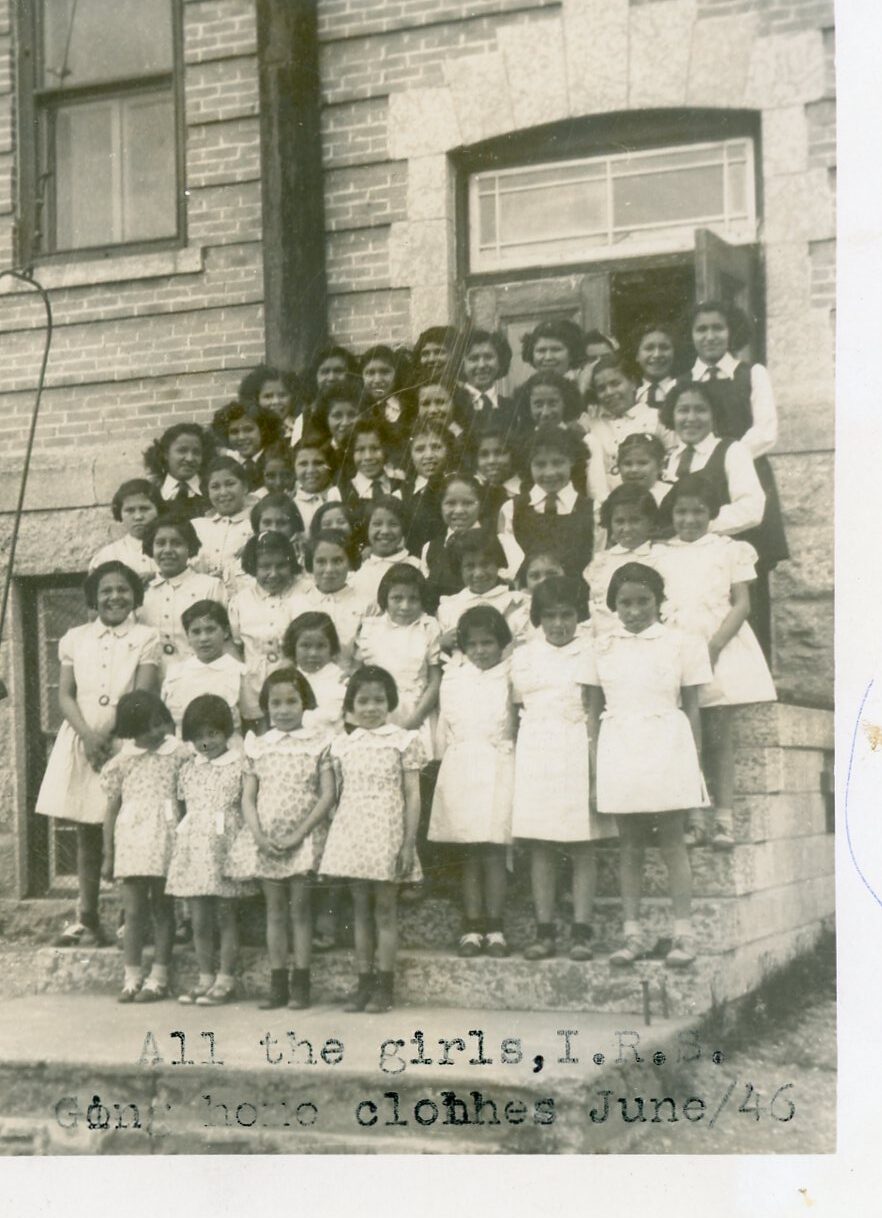
Residential schools were established in Canada in the late 19th century as part of federal government policy toward Indigenous Peoples. Their stated purpose was to assimilate First Nations, Inuit, and Métis children into Euro-Canadian society by removing them from their families, languages, cultures, and spiritual traditions.
More than 150,000 Indigenous children are known to have attended residential schools across Canada. The legacy of this system continues to affect Indigenous families and communities today.
Learn about the origins, policies, and lasting impacts of Canada’s residential school system through historical context, timelines, and educational materials.
Government Policy and Purpose
Beginning in the 1870s, the Canadian government developed policies aimed at assimilating Indigenous Peoples into the dominant settler society. Residential schools became a central tool of this approach.
The federal government funded and regulated the schools, while various Christian churches—primarily Roman Catholic, Anglican, United, and Presbyterian—were responsible for their operation. Attendance became compulsory for many Indigenous children following amendments to the Indian Act in 1920.
Government officials openly described the schools as a means to “civilize” Indigenous children and eliminate Indigenous cultures. A frequently cited statement by Duncan Campbell Scott, Deputy Superintendent of Indian Affairs, reflects this intent:
“Our objective is to continue until there is not a single Indian in Canada that has not been absorbed into the body politic.”
Residential schools were not designed primarily as educational institutions, but as instruments of cultural transformation and control.
The Residential School Experience
Experiences varied by school, time period, and location, but many survivors have described common features:
- Forced separation from family and community.
- Suppression of Indigenous languages and spiritual practices.
- Strict discipline and military-style routines.
- Chronic underfunding compared to non-Indigenous schools.
- Poor nutrition, overcrowding, and inadequate medical care.
Survivor testimonies, government records, and church documents show that many children experienced physical, emotional, and sexual abuse. Disease—particularly tuberculosis—was widespread, and mortality rates at some schools were significantly higher than among the general population.
These experiences are documented in survivor accounts collected by the Truth and Reconciliation Commission of Canada (TRC), as well as in federal and church archival records.
Impact on Indigenous Communities
The effects of residential schools extend beyond those who attended them. Survivors, their children, and their communities have described long-term impacts, including:
- Loss of language and cultural knowledge
- Disruption of family and parenting systems
- Intergenerational trauma
- Increased vulnerability to poor health and social outcomes
The TRC concluded that the residential school system amounted to cultural genocide, a finding based on the intent and effects of state policy rather than individual experiences alone.
Despite these harms, Indigenous communities have also demonstrated resilience, resistance, and leadership in reclaiming language, culture, and governance.
Awareness and Opposition at the Time
While residential schools operated for more than a century, not all Canadians supported them, and concerns were raised during their operation.
- Medical professionals and government inspectors reported high death rates and poor living conditions as early as the early 1900s.
- Dr. Peter Bryce, Chief Medical Officer for the Department of Indian Affairs, publicly documented preventable deaths and criticized government inaction in 1907 and 1909.
- Some journalists, church members, and Indigenous leaders spoke out against the conditions, though their warnings were largely ignored or suppressed.
These records demonstrate that information about harm within the schools was known at various points, even if it did not lead to meaningful reform at the time.
Key Dates in Residential School History
- 1870s – Federal residential school policy begins to take shape.
- 1883 – First federally funded residential schools open.
- 1920 – Attendance becomes compulsory for many Indigenous children.
- 1950s–1960s – Growing criticism; gradual policy shifts toward integration.
- 1996 – Last federally operated residential school closes.
- 2008 – Federal government issues a formal apology.
- 2015 – Truth and Reconciliation Commission releases its Final Report.
Addressing Denial and Misinformation
The existence, purpose, and impacts of residential schools are supported by extensive documentation, including:
- Federal legislation and policy records
- Church archives
- Medical and inspection reports
- Survivor testimonies
- Independent historical research
Residential schools are not a matter of opinion or belief; they are a documented part of Canadian history, recognized by the Government of Canada, the courts, and international human rights bodies.
Learn More
This overview is intended to provide context for visitors who may be unfamiliar with this history. Those wishing to explore further are encouraged to consult the following sources:
- Truth and Reconciliation Commission of Canada – Final Report and Calls to Action
- National Centre for Truth and Reconciliation (NCTR)
- Library and Archives Canada – Residential School Records
- Royal Commission on Aboriginal Peoples (1996)
- United Nations Declaration on the Rights of Indigenous Peoples (UNDRIP)